


Playing Chords
There are many ways to approach improvising over chord changes. Some players rely on their ears, some players think of the changes, and some players do both. In any case, learning to play chords on your instrument will help you to hear them as well as think of them when it comes to playing over changes.
Playing Triads
Before learning to play chords on your instrument, you should learn all of the major, minor and harmonic minor scales, since many chords are built from these scales. Next, you should learn all of the major, minor & diminished triads in all of their inversions, up and down on your instrument:
click to enlarge
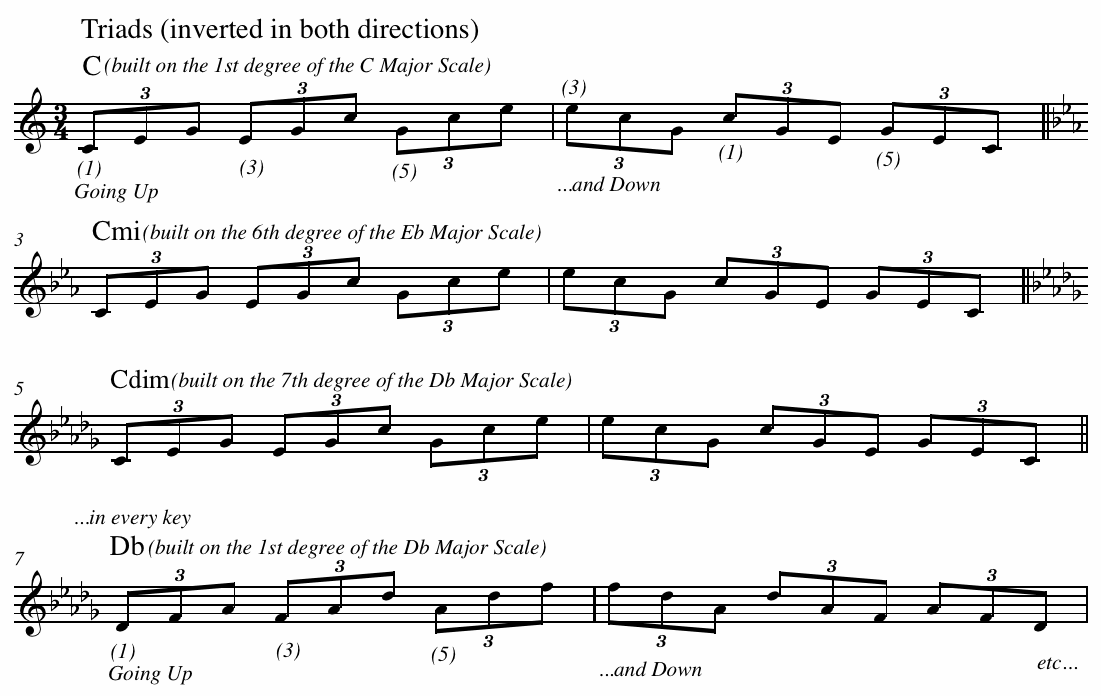
(If you play a chordal instrument such as piano or guitar, then you should also practice these as stacked triads)
Click Below to Watch a Video of the Examples Above:
Playing 7th Chords
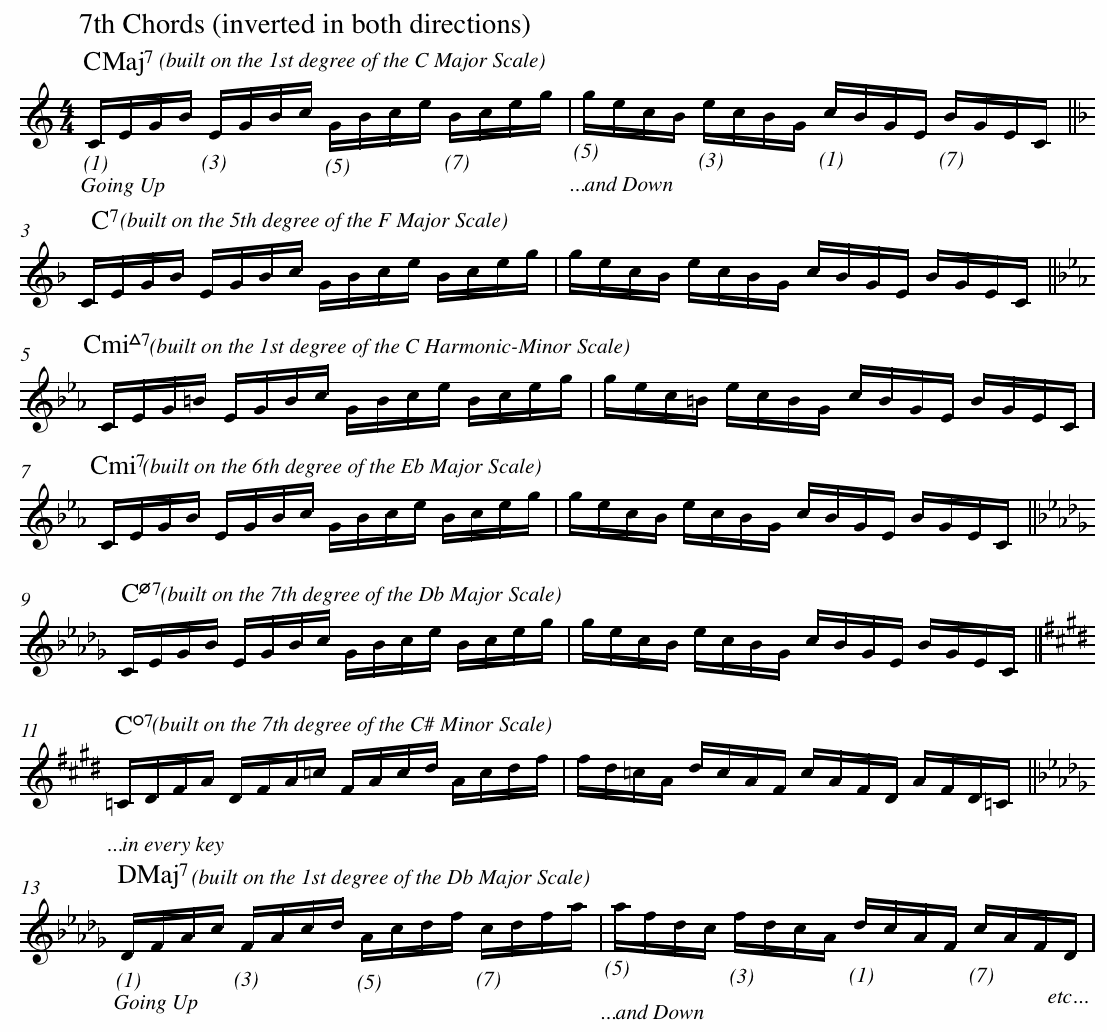
The next step is to practice the different 7th chords that are built using these triads in all of their inversions, up and down (including the Major 7th, Dominant 7th, minor/major 7th, minor 7th, half-diminished 7th & diminished 7th) :
click to enlarge
Click Below to Watch a Video of the Examples Above:
Other Chords
In addition to these common diatonic chords, there are many other chords (including diatonic chords with upper-extensions and non-diatonic chords) that you can practice in a similar manner. Refer to the Chord Nomenclature section to see them all. Getting started with these will help your hand-eye-ear coordination when it comes to reading & hearing changes in improvisation. Practicing chords in all of their inversions is important because it prepares your ears to hear them from different perspectives and prepares your fingers to be able to respond to what you hear automatically, without thinking.
Reading Chord Changes
Assuming that you understand chord symbols (please refer to Chord Nomenclature if you do not), an easy way to read (play) chord changes at first is to simply run them up and down on your instrument through the inversions, as above, while following the order of the progression. Doing this will help you to discover their sound both individually and in relation to one another. It will also reveal basic possibilities in building lines on the progression. For example, the first four chords of "Confirmation", by Charlie Parker, can be practiced this way. Beginning by running up the chords in all inversions:
click to enlarge

Click Below to Watch a Video of the Examples Above:
Then running down the chords in all inversions:
click to enlarge

Click Below to Watch a Video of the Examples Above:
and finally mixing directions and inversions, connecting them by next closest note and adding in scales:
click to enlarge


